The Heart of the Electric Car: How Battery Technology Works and What Affects Driving Range

The Heart of the Electric Car: How Battery Technology Works and What Affects Driving Range
In just a few years, electric vehicles (EVs) have gone from a niche product to a mainstream choice on Canadian roads. Behind their quiet operation and instant torque lies a complex piece of technology — the battery. It’s the heart of every EV, determining how far you can drive, how quickly you can recharge, and how long the vehicle will last. Here’s a closer look at how EV batteries work and what really affects their driving range in Canadian conditions.
Inside the Battery – Layers of Energy
Most modern EVs use lithium-ion batteries, the same type found in smartphones and laptops, but on a much larger scale. An EV battery pack contains thousands of small cells grouped into modules and housed in a protective casing, usually mounted under the vehicle floor.
Each cell has an anode, a cathode, and an electrolyte that allows lithium ions to move between the two. When you drive, ions flow from the anode to the cathode, releasing electrical energy to power the motor. When you plug in to charge, the process reverses.
Battery capacity is measured in kilowatt-hours (kWh) — the higher the number, the more energy it can store and the farther the car can travel. Today’s EVs typically have batteries ranging from 50 to 100 kWh, giving a real-world range of roughly 300 to 600 kilometres, depending on the model and driving conditions.
Læs også:


What Affects Driving Range?
While automakers list an official range, the actual distance you can travel on a charge varies widely. Several factors come into play:
- Driving style: Rapid acceleration and high speeds consume more energy. Smooth, steady driving can significantly extend range.
- Temperature: Cold weather slows the chemical reactions inside the battery, reducing capacity. In a Canadian winter, range can drop by 20–40%.
- Weight and load: Extra passengers, cargo, or a roof box increase energy use.
- Tire pressure and rolling resistance: Underinflated tires make the car work harder, using more power.
- Heating and air conditioning: Cabin heating, especially in vehicles without a heat pump, draws energy directly from the battery.
- Terrain: Driving uphill uses more energy, though regenerative braking can recover some of it on the way down.
Regenerative Braking – Energy That Comes Back
One of the EV’s most efficient features is regenerative braking. When you lift off the accelerator or apply the brakes, the electric motor acts as a generator, converting motion back into electricity and sending it to the battery.
Depending on the system, regenerative braking can extend range by 10–20% in city driving. Many EVs let drivers adjust how strong the effect is — from light deceleration to “one-pedal driving,” where the car slows almost to a stop without touching the brake pedal.
Charging – From Home Plug to Fast Charger
Charging time depends on both the battery size and the type of charger used.
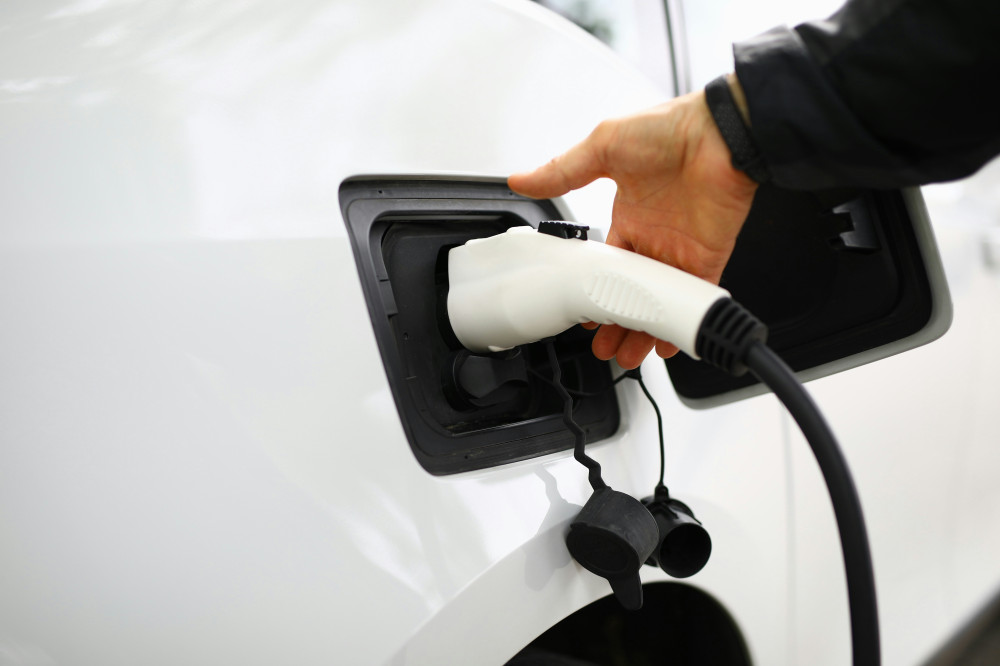
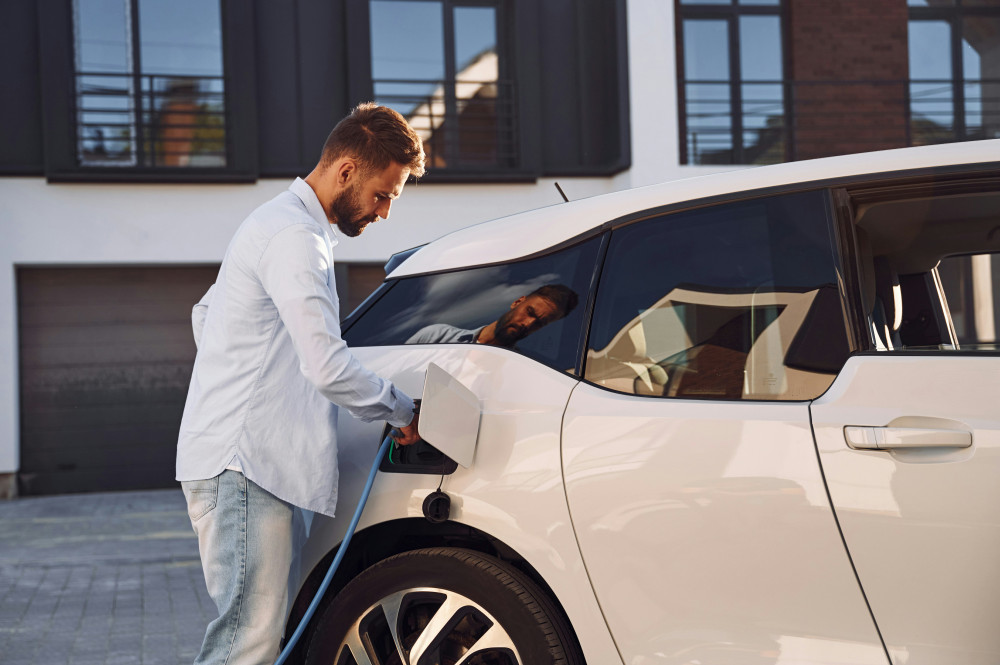
- Home charging (AC): With a Level 2 charger (typically 7–11 kW), a full charge takes 6–10 hours — perfect for overnight charging.
- Fast charging (DC): On the highway, a DC fast charger can deliver 100–350 kW, adding 200–300 kilometres of range in 20–30 minutes.
Batteries are designed to protect themselves by slowing the charge rate as they near full capacity. That’s why the last 20% of charging takes longer. For daily use, it’s often most efficient to charge up to about 80%.
Battery Lifespan and Care
EV batteries degrade gradually, but modern systems are built to last. Most manufacturers offer 8-year warranties or up to 160,000 kilometres on the battery.
To extend battery life:
- Avoid charging to 100% or letting it drop to 0% too often.
- Keep the vehicle in moderate temperatures when possible.
- Use fast charging sparingly — it’s convenient but can increase wear over time.
When a battery eventually loses too much capacity for driving, it can be repurposed for stationary energy storage, such as in solar power systems, before being recycled for valuable materials.
The Future of Batteries – Lighter, Faster, Greener
Battery research is advancing rapidly. Engineers are developing solid-state batteries, which replace the liquid electrolyte with a solid material. These promise higher energy density, faster charging, and improved safety.
At the same time, production is becoming more sustainable. New chemistries reduce the need for rare metals like cobalt, and recycling programs are expanding across Canada to recover lithium, nickel, and other materials.
The goal is clear: to make electric vehicles more efficient, affordable, and environmentally friendly — from raw material extraction to end-of-life recycling.
A Heart in Constant Evolution
The EV battery is more than just a power source — it’s a rapidly evolving technology at the core of the electric revolution. Understanding how it works and what affects it helps drivers get the most out of their vehicles.
With smart driving habits, thoughtful charging, and a bit of technical awareness, Canadian EV owners can maximize both range and battery life — driving cleaner and farther into the future.
Læs også: